Start with how you feel: cycle phases and real energy
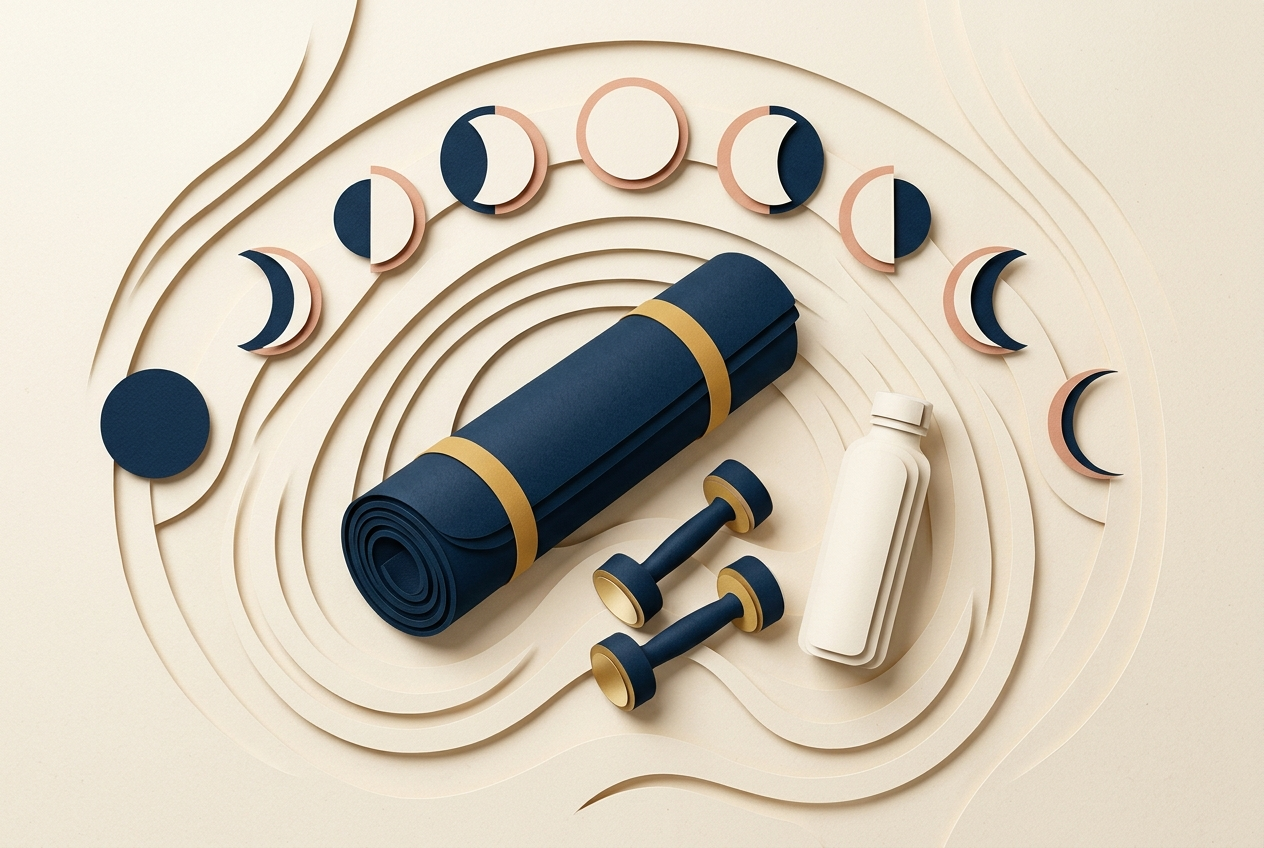
Some days you may want your usual routine; on others, you may prefer a lighter session or rest. The menstrual cycle produces natural hormonal shifts that influence energy, body temperature and recovery. In the follicular phase (from the start of your period to ovulation), estrogen levels rise and glycogen access is favorable, making many women feel capable of regular strength work. In the late luteal phase, rising progesterone increases core body temperature and resting heart rate, which can make identical workouts feel significantly more demanding. You do not need to prove commitment by ignoring discomfort. Tell your coach when you want to discuss changing a session.
The physiology: why lifting weights supports hormonal health
Skeletal muscle is the body primary metabolic sink for blood glucose, accounting for 70% to 80% of insulin-mediated glucose disposal. Clinical guidelines from the Monash International PCOS Consensus and the ADA emphasize that progressive resistance training stimulates GLUT4 glucose transporters independent of insulin, directly enhancing insulin sensitivity and promoting metabolic balance. For women experiencing cycle irregularities or fatigue, consistent low-stress resistance training 2 to 3 days per week supports hormonal health far better than exhausting, chronic cardio.
Sources: Monash University: International PCOS Guidelines; American Diabetes Association: Exercise and Insulin Sensitivity
Cycle-phase training adaptations
Rather than forcing identical intensity across all four weeks, smart training adapts to physiology. During the menstrual phase (Days 1 to 5), light mobility work, walking, or moderate machine-supported resistance training often alleviates pelvic cramping by stimulating blood flow and beta-endorphin release. During the follicular phase (Days 6 to 14), progressive overload and challenging lifts feel best. During the late luteal phase (Days 20 to 28), increasing rest periods to 90 to 120 seconds between sets and ensuring adequate hydration prevents excessive central nervous system fatigue.
Sources: NHS: Period pain and menstrual cycle symptoms; Monash University: International PCOS Guidelines
When to rest and when to seek medical advice
Gentle movement such as walking, light cycling, mobility and yoga can help ease period pain, but demanding gym sessions are not a mandatory cure for severe symptoms. The NHS advises consulting a doctor when menstrual pain disrupts ordinary daily activities, worsens abruptly, or is accompanied by unusually heavy bleeding. A fitness coach cannot diagnose medical conditions. Always prioritise medical care when warning signs appear.
The training conversation at IMFIT Madhapur
At IMFIT, coaches maintain a strict 1:6 coaching ceiling, ensuring personal attention on both our 2nd-floor functional space and 3rd-floor strength racks. You can openly discuss timing and exercise substitutions to suit your energy. Share only what is comfortable in a private conversation; the website enquiry form never asks for personal medical details. This is general fitness education, not medical prescription.
Questions people ask
Is it safe to lift heavy weights during your period?
Yes, if your energy and comfort allow. Many women experience steady strength during menstruation as estrogen and progesterone are at baseline. However, if cramps or low back fatigue are present, reduce the load by 20% to 30% and focus on higher repetitions or machine-based support.
Sources: NHS: Period pain and menstrual cycle symptoms
Can strength training help with PCOS and menstrual regularity?
Clinical guidelines from the Monash International PCOS Consensus and the ADA indicate that progressive resistance training 2 to 3 days per week improves systemic insulin sensitivity, helps lower resting free testosterone via higher SHBG, and supports ovulatory regularity over 12 to 24 weeks.
Sources: Monash University: International PCOS Guidelines; American Diabetes Association: Exercise and Insulin Sensitivity
Should I skip cardio during my period?
Exhausting HIIT can elevate cortisol when you are already fatigued, but low-intensity Zone 2 cardio like a 20 to 30-minute outdoor walk supports blood flow, releases endorphins, and often eases pelvic discomfort.
Build your next step
Sources and further reading
- NHS: Period pain and menstrual cycle symptoms
- Monash University: International PCOS Guidelines
- American Diabetes Association: Exercise and Insulin Sensitivity
Sources checked 2026-10-22.
This article is for general information and does not replace professional medical advice. Consult a qualified healthcare professional for guidance suited to your needs.
Find your starting point.
Visit IMFIT in Madhapur and talk through your training options.
Plan your first visitWas this useful?
A little feedback helps us choose what to explain next.
Your questions & thoughts
What would help you put this into practice?
Comments appear after review. Keep it kind and relevant; please leave out phone numbers, medical details and other private information.
Loading reader comments…
Leave a comment +