The machine is free. Is it a compromise?
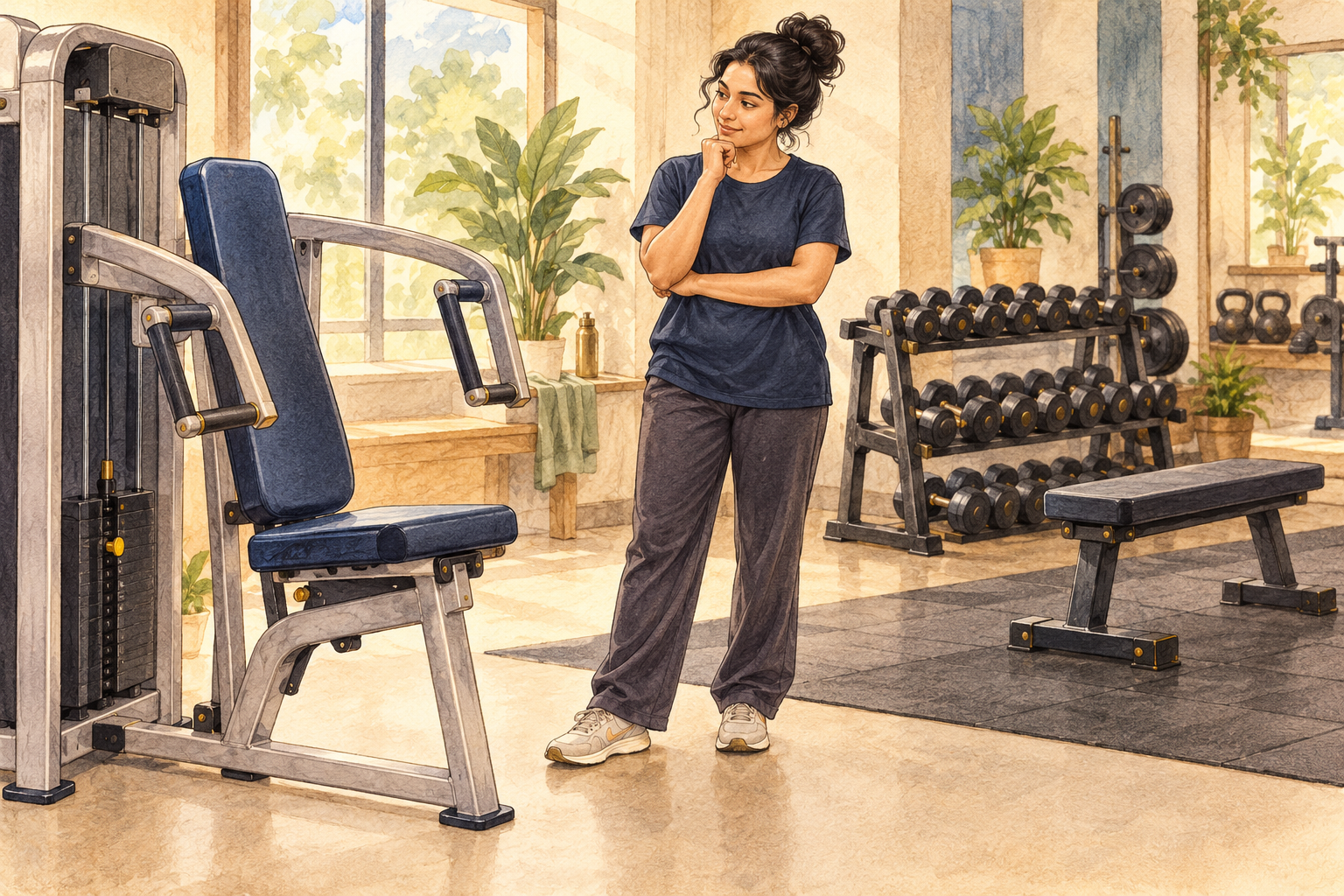
An imagined first-week visit: the chest-press machine is available. The dumbbell benches look busier. You choose the machine, then wonder whether you're missing the better workout.
Machines and free weights can both build strength and muscle. For general fitness, you don't need to treat the machine as a temporary compromise. The more useful question is which movement and result you want to work on.
“Stronger” needs a little more detail
Getting stronger at a particular exercise and increasing muscle size are different outcomes. That distinction helps explain why an equipment debate can produce apparently conflicting answers.
A 2022 research review found that strength improvements favoured the equipment used in training when people were tested on that same type of exercise. Neutral strength tests and muscle-growth measures did not show a clear equipment advantage.
In plain language: practising a lift matters if getting better at that lift is your goal. A finding about performance on a machine or a barbell isn't automatically a finding about which builds more muscle.
Evidence: [2]
One equipment question, three possible goals
Your goal
Muscle development
Reviews found no clear overall advantage for one equipment type. Exercise choice and the person still matter.
A machine-based lift
If performance on that lift matters, include practice of that task in the plan you discuss.
A free-weight lift
If that lift is your target, practise its particular movement with appropriate guidance.
What the muscle-growth evidence can say
A 2023 review of studies in healthy adults aged 18–60 also found no clear overall difference in muscle growth between machine and free-weight training. The authors cautioned that the muscle-growth evidence was limited. This supports having options; it doesn't prove every exercise or every person's results will be identical.
ACSM's 2026 guidance likewise reports that equipment type did not consistently affect outcomes for the average healthy adult. A suitable training plan still matters. Choosing one tool cannot replace decisions about the exercises, effort and practice in your week.
The machine in our imagined visit can therefore have a proper place in training. Its presence alone cannot tell us whether the whole session suits you.
Let the next choice follow the goal
Keep the imagined chest-press choice, but give it two different aims.
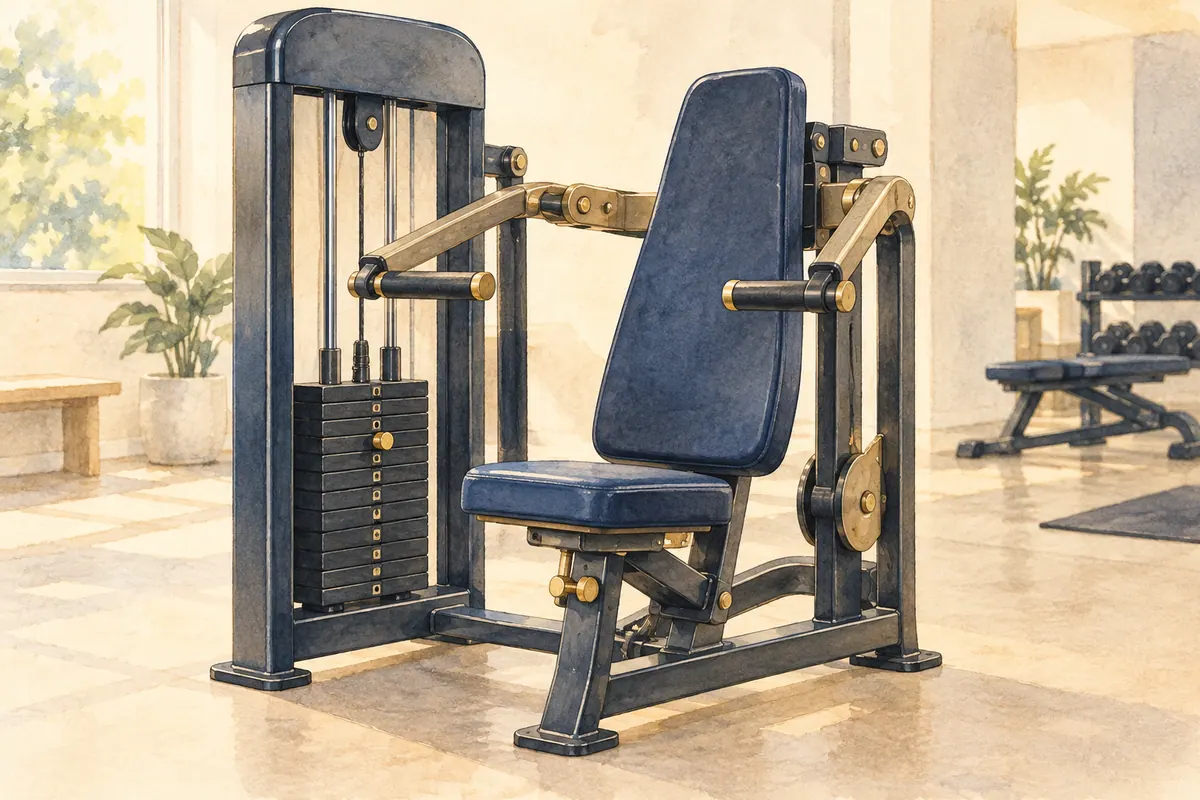
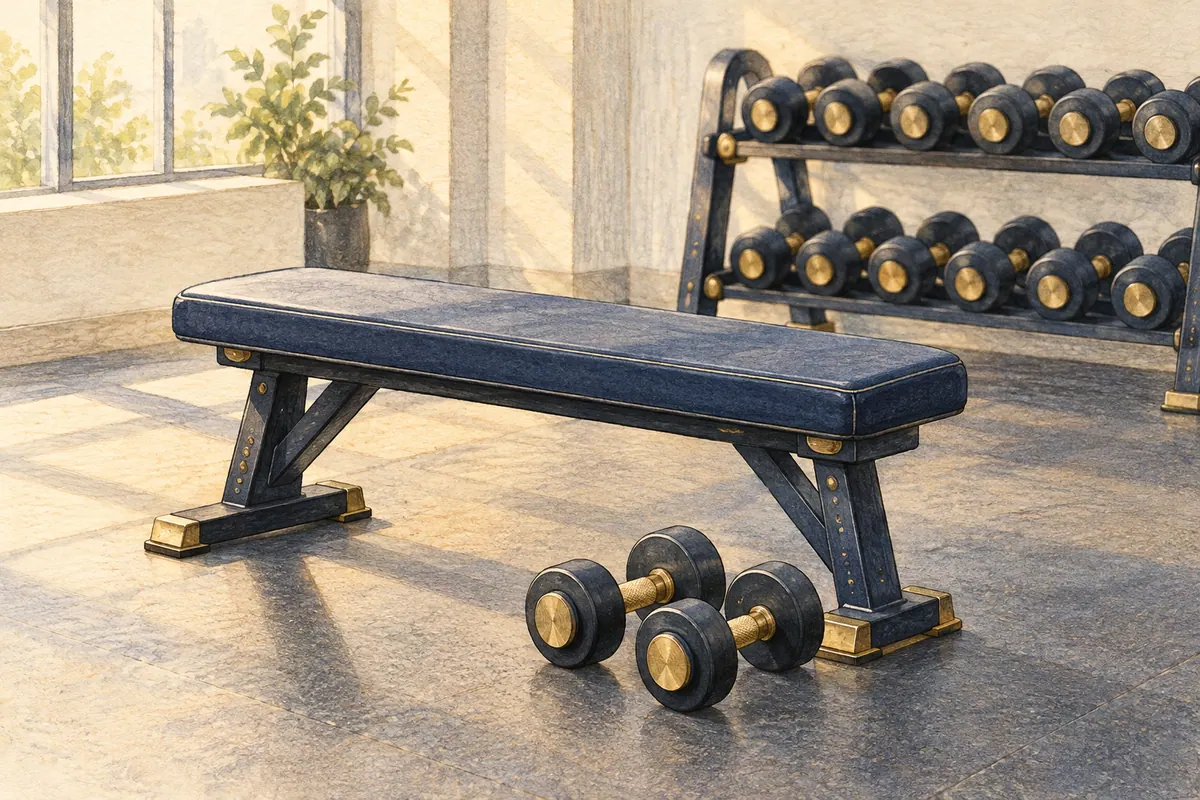
If the aim is learning a suitable press as part of general strength training, the available machine may fit. If the aim is getting better at a dumbbell press, discuss an opportunity to learn that movement too. Machine performance alone cannot tell you how well you can perform the dumbbell task.
The equipment choice follows the question you want training to answer. Switching between those exercises is not automatically an upgrade or a setback; it changes what you are practising.
These are illustrative planning choices, not an instruction to start a new lift, test your maximum or copy a fixed routine.
See the two stations
From a first try to a useful review
- Before starting
Name the aim
General strength, muscle development or a particular lift? Tell the coach which question you want the plan to answer.
- While learning
Learn the setup
Ask for the seat or bench position, intended movement and starting level to be explained.
- At a review
Decide what changes
Discuss the exercise you practised and whether the next choice follows your goal or simply a free station.
You can learn a tool without pledging loyalty to it
Back in our imagined visit, an available station can help you begin. It need not decide every future equipment choice. Ask for the setup and intended movement to be explained, and name what you actually practised when you review the session.
If a different station is used on a busy day, clarify whether it is a temporary alternative or a planned change. The decision can be practical while still connected to your goal.
Having a fixed path does not make a machine automatically suitable for every person. Share pain, injury history or existing healthcare advice with your coach and seek appropriate professional guidance when needed. This article does not compare injury rates or prescribe rehabilitation.
Make the choice concrete at IMFIT Madhapur
IMFIT's third-floor strength, cardio and hypertrophy training includes resistance machines, free weights and trainer guidance on equipment and movement technique. Ask to see the options relevant to your starting point and to understand why a particular exercise is in your plan.
A useful first conversation can be quite specific: you want to learn the chest-press machine, or you want help beginning a particular free-weight movement. The team can explain the coaching available. No piece of equipment, membership or article can promise your individual result.
Questions people ask
Do I eventually have to graduate from machines?
No evidence here establishes a compulsory graduation date. ACSM's guidance does not require one equipment type for general healthy-adult training. You can discuss free-weight practice when it serves your goal, rather than treating a machine as an expired beginner option.
Evidence: [3]
Is combining both proven to be best?
The 2023 review suggested a combination might be useful, but identified that as speculation. It did not prove that mixing equipment produces the best results for everyone. A mixed plan should have a reason suited to your exercises and goals.
Evidence: [1]
Build your next step
Sources and further reading
- Haugen et al., 2023: Free-weight vs machine training — systematic review/meta-analysis; checked 14 October 2026
- Heidel et al., 2022: Machines and free weights — strength-test specificity and muscle size; checked 14 October 2026
- ACSM: Official summary of 2026 resistance-training guidance — published 17 March; checked 14 October 2026
Sources checked 2026-10-14.
This article is for general information and does not replace professional medical advice. Consult a qualified healthcare professional for guidance suited to your needs.
Get introduced to the equipment you want to learn.
Visit IMFIT Madhapur to discuss your starting point and strength-training goals. Ask about trainer guidance, machines and free weights—and why an exercise belongs in your routine.
Discuss your starting point