Start with one sentence
For your first gym session, explain that you’re new, get familiar with the space and learn suitable movements with guidance. Aim to leave knowing the setup you practised and the next agreed step.
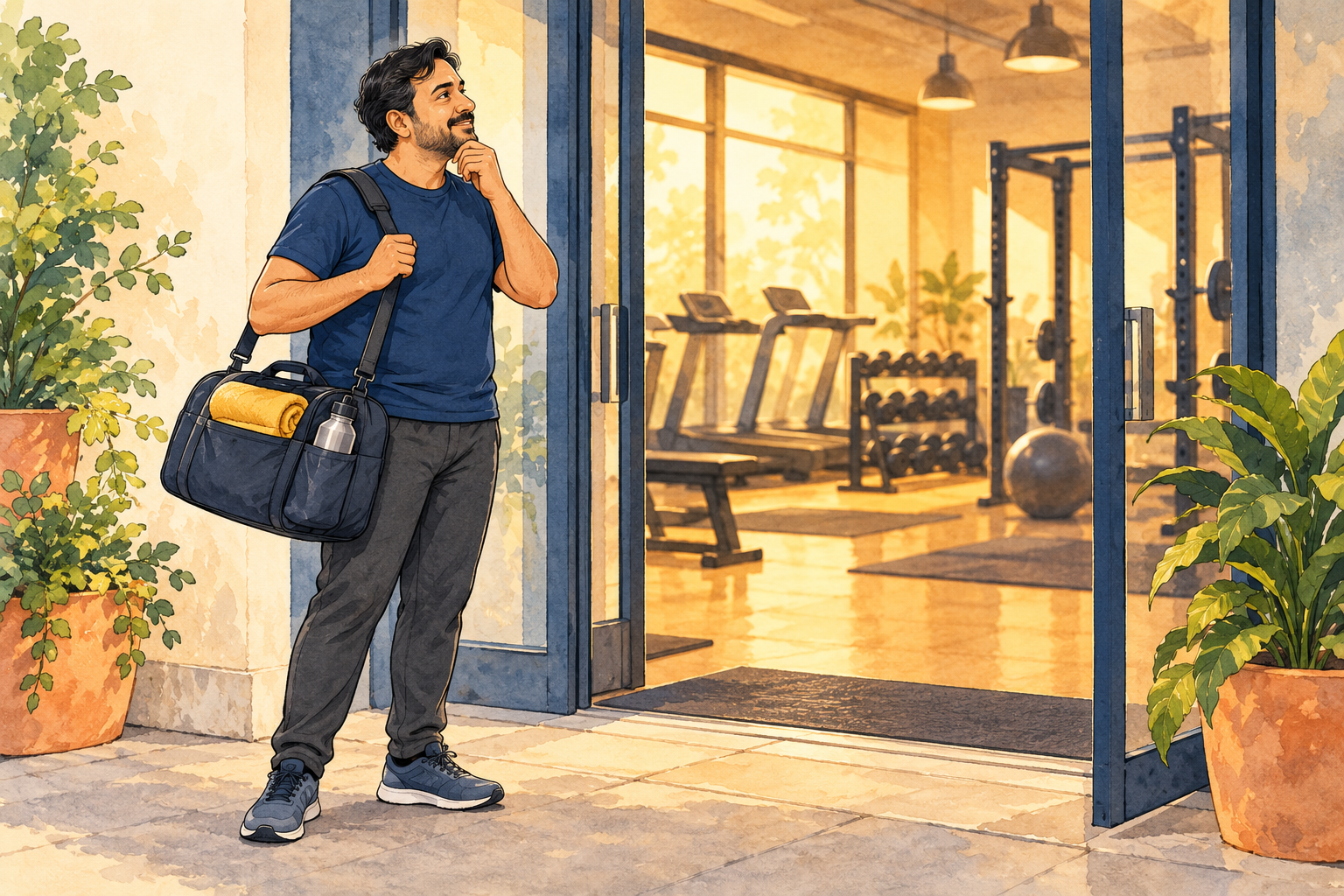
An imagined first visit: the bottle, towel and shoes are packed. Your gym bag looks more prepared than you feel. Start with one sentence: “I’m new. Where should I begin?”
A first session is a chance to learn
You do not need to recognise every machine before walking in. Ask who can help, where your belongings go and which equipment you will use. Knowing how to get assistance is more useful than a hurried tour of every station.
If training is part of the agreed visit, start gently, warm up before more challenging activity and learn suitable movements with instruction. The amount should fit your experience, health and available time. A visit to look around and a coached workout are different arrangements—check what yours includes.
A first session: four useful stages
Arrive
Say you are new. Explain your starting point and ask who can help.
Get familiar
Locate assistance and the equipment selected for your session.
Practise
Warm up, then learn suitable movements and their setup with guidance.
Agree the next step
Ask what to practise next time and how to get help with it.
The machine is new. The next decision can be simple.
Back to our imagined beginner. Someone has just finished on a machine. The seat is already set, the weight pin is in place and there is a tempting shortcut: leave everything as it is.
Another person’s settings tell you what they used. They do not tell you what suits you. Before trying it, ask for the setup and controls to be explained. For example: “Can you show me how to adjust this and watch me practise the setup?” Agree when that help is available.
Then explain the setup back in your own words. If you still cannot identify an adjustment or how to stop safely, ask again. The useful first-session result is understanding something you can repeat, rather than collecting a long list of machines.
Evidence: [3]
Pack the basics. Bring the context too.
Wear comfortable clothes and suitable training shoes; bring water and a towel, and check any gym-specific rules. You can sort out a routine before shopping for specialist kit.
Tell the coach what activity you currently do, whether you have trained before and the time you can realistically give. If you have a health concern or clinician’s advice, discuss appropriate activity with a qualified healthcare professional and share relevant guidance privately with the coach. Stop exercising if you feel pain or become unwell; seek appropriate advice rather than pushing through.
Before you leave home: pack, share, ask
Pack the basics
Comfortable clothes, suitable training shoes, water and a towel.
Share the context privately
Your experience, realistic available time and relevant professional guidance.
Have one question ready
“Who can show me the setup and help me practise it?”
Leave with an answer you can use next time
Before leaving, ask: “What should I practise next time, and who should I ask if I cannot remember the setup?” Agree the next step rather than assuming that a first visit commits you to a programme.
In our imagined scene, the bag is still neatly packed. The more useful thing to take home would be one setup you understand and one clear question for the next session. You do not need to become the person who knows every machine on day one.
Planning a first visit to IMFIT
At IMFIT Madhapur, you can ask to see both floors and discuss a suitable starting point. Angadh offers individual coached movement, strength and conditioning; this is distinct from dedicated one-to-one personal training. Ask what guidance and session times suit your needs.
Use the enquiry form’s “I’m not sure yet” option if you have not chosen a programme. Keep health details out of the form and discuss them privately. The team confirms any visit or session; an enquiry does not reserve a workout or free trial. Sunday is closed.
Our membership guide explains coaching formats and fees. If you are returning after 40, the starting-level guide goes further into choosing an appropriate entry point.
Questions people ask
How long should my first gym session be?
There is no single duration that suits every beginner. Agree an amount appropriate to your health, experience and available time, then build gradually. Trying to fill a long session can distract from learning what you are doing.
Does asking for guidance mean I need personal training?
IMFIT gym plans include trainer guidance. Dedicated personal training is a separate, personalised one-to-one format. Ask what support your chosen plan includes and when it is available; do not assume an exclusive coach is included.
Evidence: [5]
Build your next step
Sources and further reading
- NIDDK: starting slowly and choosing appropriate activity; page reviewed May 2017; checked 22 October 2026
- NHS: warming up and stopping if pain or unwell; page reviewed June 2026; checked 22 October 2026
- Better Health Channel, Victorian Government: suitable kit, gradual progression and instruction; reviewed July 2022; checked 22 October 2026
- IMFIT contact: first-visit enquiry, private health information and confirmation; checked 22 October 2026
- IMFIT membership: trainer guidance and distinct training formats; checked 22 October 2026
- IMFIT Angadh: individual coached movement, strength and conditioning; checked 22 October 2026
Sources checked 2026-10-22.
This article is for general information and does not replace professional medical advice. Consult a qualified healthcare professional for guidance suited to your needs.
Plan your first IMFIT visit
Tell the team you are starting out, the times you can manage and what help you want. Ask what the visit will include and wait for confirmation.
Discuss my first visitWas this useful?
A little feedback helps us choose what to explain next.
Your questions & thoughts
What would help you put this into practice?
Comments appear after review. Keep it kind and relevant; please leave out phone numbers, medical details and other private information.
Loading reader comments…
Leave a comment +